✅ Medically reviewed
Ice or heat for arthritis is a daily decision for many people with joint pain. Over 10 million people in the UK live with arthritis, according to Versus Arthritis. An estimated 5.4 million of them have osteoarthritis in the knee. Most reach for an ice pack or a hot water bottle long before seeing a specialist. Both options can ease pain, yet neither suits every situation.
The right choice depends on timing, swelling and stiffness. A puffy, flared joint behaves very differently from a stiff, achy one. Picking the wrong option can leave the joint feeling worse instead of better.
Knowing when to use ice vs heat makes home care simpler and safer. Clear rules exist for how each option works and which symptoms suit each one. Other rules cover how long each should stay on the skin. Equally clear signs show when a specialist should step in.
How Hot and Cold Therapy Work on Arthritic Joints
Hot and cold therapy both change blood flow around a joint. The effects run in opposite directions, which explains why each suits different symptoms.
Cold narrows blood vessels. Less blood reaches the area, so swelling and inflammation settle. Cold also slows nerve signals, which numbs pain for a short time. Heat widens blood vessels. More blood, oxygen and nutrients reach the joint and the muscles around it. Tight muscles relax, and stiffness loosens.
Neither option treats the cause of arthritis. Both manage symptoms only. They do not repair joint surfaces or slow the condition.
Research on ice or heat for arthritis is mixed. Some studies report mild and similar pain relief from both. Personal response therefore matters, and many people simply favour one. The joint itself offers the best clue. A warm, swollen joint rarely enjoys more warmth. A cold, stiff joint rarely enjoys more cold.
When to Use Ice vs Heat for Arthritis Pain
A simple rule settles most questions about ice or heat for arthritis. Swelling and warmth in the joint point towards cold. Stiffness and muscle tightness point towards heat.
When to Use Cold Therapy
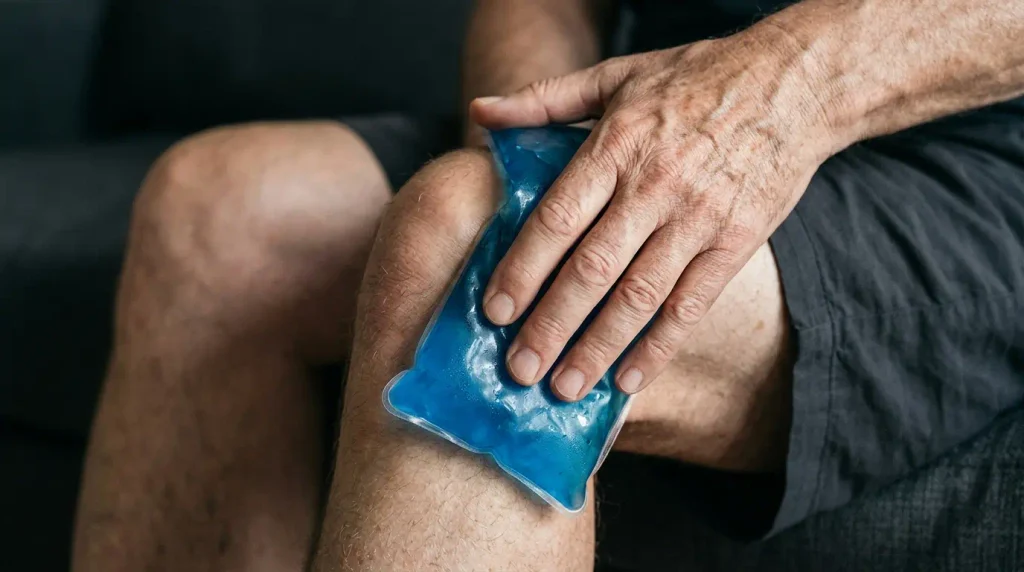
Cold suits flare-ups. A joint that looks puffy, feels warm, or throbs after activity usually responds well to ice. Cold limits fluid build-up and eases pain linked to swelling.
Ice also helps after a busy day on the feet. A short session after exercise can settle soreness. Ice straight before exercise is best avoided, because it may reduce muscle strength and joint control. Frozen peas make a classic cold pack. They mould neatly around a knee, although dinner plans may suffer.
When to Use Heat Therapy
Heat suits stiffness. Morning stiffness, aching joints and tight muscles usually improve with gentle warmth. A warm pack before a walk or stretching session helps loosen the joint first.
Heat should stay off swollen, bruised or newly injured areas. Warmth can increase swelling and discomfort in those cases. Waiting at least two days after a new injury is the usual advice.
Ice vs Heat for Acute Injury
An acute injury happens suddenly, such as a twist, a knock or a fall. Swelling builds fast, so cold generally comes first. Heat joins later, once the swelling has settled.
Ice vs Heat for Chronic Pain
Chronic joint pain lasts for weeks or months. Stiffness and muscle tension often dominate, so heat usually takes the lead. Cold keeps a supporting role during short flares.
Heat Therapy for Arthritis and Stiff Joints
Heat therapy for arthritis works best on stiff, achy joints without visible swelling. Several methods deliver warmth safely at home. A warm bath or shower relaxes the whole body. Microwaveable wheat bags and electric heat pads suit one joint at a time. A warm, damp towel also works in a pinch.
Hands, knees and hips often feel stiffest in the morning. A warm shower before getting dressed can ease that early stiffness. A heat pad on the lower back helps during long periods at a desk. Warm is the target, not hot. Hot temperatures risk burns. Skin that stays red after the pack comes off signals that the pack was too hot.
Gentle movement works well alongside warmth. Light stretches after a heat session take advantage of looser muscles. Strengthening exercises then protect the joint in the longer term.

Ice or Heat for Knee Pain from Arthritis
The knee carries body weight with every step, so it often complains first. Osteoarthritis in the knee brings pain, stiffness and occasional swelling. Choosing ice or heat for knee pain depends on which symptom is loudest.
Cold Therapy for Knee Pain
Cold therapy for knee pain suits a swollen, warm knee after a long walk. An ice pack wrapped in a thin towel rests on the knee for 15 to 20 minutes. Raising the leg on a cushion helps fluid drain away.
Heat Therapy for Knee Pain
Heat therapy for knee pain suits stiffness after sitting or first thing in the morning. A heat pad or warm towel placed on the knee for 20 to 30 minutes loosens tight muscles. Gentle bending exercises can follow.
Pain, swelling and stiffness together often signal active osteoarthritis. A specialist assessment confirms the cause and guides longer-term treatment. Ice and heat remain helpful additions to that plan.
Ice or Heat for Arthritis in the Hands, Hips and Shoulders
Knees are not the only joints affected. Hands, hips and shoulders all respond to temperature changes in similar ways. Ice or heat for arthritis in these joints follows the same swelling-versus-stiffness rule.
Hands and Fingers
Stiff fingers are common first thing in the morning. A bowl of warm water, not hot, loosens small joints before gripping tasks. Swollen, tender knuckles during a flare prefer a cold pack wrapped in a cloth.
Hips
Hips sit deep beneath thick muscle, so surface temperature changes feel less direct. Many people find warmth more comforting there. A heat pad over the outer hip before a walk can ease the first few steps.
Shoulders
Shoulder stiffness builds after overhead tasks and long desk days. Heat before gentle mobility work helps the joint move. A cold pack afterwards settles any aching that follows.
Swelling, Joint Pain and Muscle Tension Need Different Choices
Arthritis rarely travels alone. Swelling and sore muscles often join the picture. Each symptom has a preferred option.
Heat or Ice for Joint Pain
Heat or ice for joint pain depends on the type of pain. Dull, stiff aching favours warmth. Sharp, throbbing pain with swelling favours cold. Many people find both useful within a single week.
Heat vs Ice for Swelling
Heat vs ice for swelling is rarely a close contest. Ice wins because cold narrows blood vessels and limits fluid build-up. An ice pack for swelling works best in short sessions with the joint raised.
Heat or Ice for Sore Muscles
Heat or ice for sore muscles depends on the cause. Tight, stiff muscles relax with warmth. Soreness after unusual exertion may ease with a cold pack straight afterwards. Gentle stretching follows once the soreness settles.
Heat or Ice for Muscle Spasm
For a muscle spasm, heat or ice both help, though warmth usually wins. Gentle heat relaxes the contracted fibres and calms the cramp. Ice can be added later if the area feels hot or inflamed.
Is Cold Therapy Good for Muscle Pain?
Cold therapy suits muscle pain linked to a recent strain with swelling. Stiff, tight muscles generally respond better to heat instead. Cold may even increase guarding in muscles that are already tight.
Other Aches That Often Sit Alongside Arthritis
Joint pain seldom stays in one spot. Back pain, sprains and nerve irritation often overlap with arthritis. The same swelling-versus-stiffness rule applies to each.

Ice or Heat for Back Pain
Spinal osteoarthritis can cause back pain and stiffness. Ice or heat for back pain follows the same timing rules as other joints. Cold fits a sudden strain in the first day or two.
Heat or Ice for Lower Back Strain
Heat or ice for lower back strain often favours heat. Much lower back pain comes from muscle spasm rather than tissue damage. Warmth relaxes that spasm and brings relief.
Ice or Heat for Sprain
Ice or heat for sprain depends on timing, and the first days favour cold. A cold pack limits swelling before anything else. A sprained ankle or knee swells quickly, and cold limits that swelling. Heat can follow once swelling and bruising fade.
Does Heat Help Sciatica?
Does heat help sciatica? For some people, yes. Warm packs on the lower back or buttock may ease muscle tightness around an irritated nerve. Sudden leg weakness or numbness needs urgent medical advice.
Osteoarthritis and Rheumatoid Arthritis Need Slightly Different Thinking
Ice or heat for arthritis applies to both main types, with small differences. Osteoarthritis develops through gradual wear in the joint. Pain often worsens with activity and settles with rest.
Heat suits the stiff periods of osteoarthritis. Cold suits temporary flares.
Rheumatoid arthritis comes from the immune system attacking the joint lining. Flares can bring marked heat, swelling and prolonged morning stiffness. Ice may calm an active flare, while warmth helps ongoing stiffness.
Rheumatoid arthritis needs medical treatment, not just home therapy. Ice and heat only add comfort alongside prescribed care. Any new, hot, swollen joint deserves prompt medical review.
Heat Pack vs Ice Pack and Other Home Options
The heat pack vs ice pack decision follows the same swelling-versus-stiffness rule. Several household items cover both needs.
Reusable gel packs can be chilled or warmed. Wheat bags suit heat. Frozen vegetables suit cold. Electric heat pads offer steady warmth for longer sessions.
A hot water bottle for pain is a classic British option. Filled with warm water instead of boiling water, it gives gentle heat for a stiff joint. A cover or towel prevents direct skin contact.
Direct contact with ice or a hot pack can damage skin. A dry towel between the pack and the skin solves that. Skin checks every few minutes catch early problems.
How Long to Apply Ice or Heat
How long to apply ice or heat matters as much as which one is chosen. Time limits protect the skin and nerves.
Cold packs stay on for 15 to 20 minutes. Sessions can repeat every two to three hours. Longer applications risk skin, tissue and nerve damage.
Warm packs stay on for 20 to 30 minutes. Sessions can also repeat every two to three hours. Skin should be checked regularly during each session.
Neither option should stay in place during sleep. Heavy sleep dulls the warning signals that normally prompt removal. Burns and ice injuries can follow.
Who Should Check First
Some conditions raise the risk of skin damage. Diabetes, poor circulation, nerve damage and reduced skin sensation all matter here. Heart conditions also call for medical advice first. A GP or pharmacist can confirm whether ice or heat is suitable. Open wounds and infected skin should never receive either option.
Alternating Heat and Cold
Heat and ice therapy can also be combined across the day. A common pattern uses heat before activity to loosen the joint. Ice afterwards settles soreness. Sessions should sit several hours apart rather than back-to-back.
Common Mistakes with Ice and Heat
Ice or heat for arthritis goes wrong in a few predictable ways. Small errors turn a helpful tool into a problem.
Heat on a fresh injury is the first mistake. Warmth in the first two days can increase swelling. Ice on a stiff joint is the second, since cold can make tight muscles tighter.
Direct skin contact is the third. Packs always need a towel layer. Overlong sessions and sleeping with a pack in place complete the list. Temperature extremes also cause trouble. Hot water bottles filled with boiling water risk burns. Frozen packs straight from the freezer risk ice burns.
Pairing Ice and Heat with Movement
Ice or heat for arthritis works best when paired with movement. Heat paired with light warm-up exercises loosens a joint before activity. Ice paired with gentle stretching afterwards settles soreness.
UK guidance places exercise and weight management at the centre of osteoarthritis care. Strong muscles around the knee share the load and reduce strain. Ice and heat make that exercise more comfortable, but never replace it.
Why Swelling and Stiffness Decide the Ice or Heat Choice
Swelling and stiffness are the two clues that settle most decisions. Swelling points to cold. Stiffness points to warmth.
Mixed symptoms point to a sequence rather than a single winner. Cold after activity and heat before activity suit many arthritic joints. Joint temperature adds another clue, since a warm joint rarely wants extra heat.
This logic sits behind every sensible answer on ice or heat for arthritis. The same reasoning applies to the knee, the hands, the hips and the back. Symptoms change day to day, so the choice can change too.
When Ice and Heat Are Not Enough
Home therapy has limits. Some signs suggest that a joint needs professional assessment.
Pain that lingers beyond three days is one sign. Swelling or bruising alongside the pain is another. Clearly limited movement and difficulty with daily tasks also matter. Pain that keeps coming back deserves attention too.
A hot, red, very swollen joint with fever needs prompt medical attention. Infection or gout can cause those signs.
Persistent knee osteoarthritis often needs more than a hot pack or an ice pack. A plan can include exercise, weight management, medicines and injections. Arthrosamid hydrogel injection is one non-surgical option that a specialist may discuss for knee osteoarthritis.
The Dr SNA Clinic YouTube channel hosts a video library on non-surgical joint pain and arthritis education.
Frequently Asked Questions
Is ice or heat better for arthritis pain?
Neither wins every time. Ice suits swollen, warm, flared joints. Heat suits stiff, achy joints without swelling. Many people use both at different moments.
Can heat make arthritis worse?
Heat can worsen a joint that is already swollen, bruised or newly injured. Warmth increases blood flow, which may add to swelling. Hot temperatures also risk burns. Warm packs on stiff joints without swelling are generally safe.
Does nerve pain go away with heat?
Does heat relieve nerve pain? Sometimes the relief is partial. Heat can relax tight muscles around an irritated nerve, as in sciatica. Heat does not treat the underlying nerve problem, so persistent symptoms need assessment.
Can ice and heat be used on the same day?
Yes, in most cases. A common routine uses heat before activity and ice afterwards. Sessions should stay short and be spaced several hours apart. Skin checks remain important each time.
When should a specialist check arthritis pain?
Pain lasting beyond three days, visible swelling, reduced movement or pain that keeps returning merits assessment. A hot, red joint with fever needs urgent attention. Specialist review also helps when ice and heat stop working. Early advice often opens up more treatment options.
Ice or heat for arthritis comes down to swelling versus stiffness. Ice suits warm, swollen flares, while heat suits stiff, achy joints. Safe time limits and skin checks protect the joint and the skin.
Mr Syed Nadeem Abbas is a specialist in non-surgical knee and joint pain care. Book a consultation to discuss persistent arthritis pain.
Read more: Arthrosamid NHS Coverage Is Rare, Private Funding Fills The Gap
Read more: Patellar Tendinopathy: Causes, Symptoms, Treatment and Recovery