✅ Medically reviewed
Arthrosamid knee effusion is a topic that rarely gets the attention it deserves. Effusion simply means extra fluid inside the knee joint. Many people with osteoarthritis already live with a puffy, tight knee long before an injection is discussed. Arthrosamid is a hydrogel placed inside the knee to ease osteoarthritis symptoms. Fluid in the joint changes how that treatment is planned and how recovery is judged. This article explains why clinicians drain excess fluid first. It also covers normal swelling afterwards and the warning signs that need urgent review. The knee may be small, but its fluid has big opinions.
What Knee Effusion Means
Knee effusion is the medical term for excess fluid in or around the knee joint. The everyday name is water on the knee, although the fluid is not plain water. A better description is extra synovial fluid, the slippery liquid that keeps the joint gliding.
How Effusion Looks and Feels
The knee looks puffy and feels tight. The normal hollows beside the kneecap fill in, and a soft bulge may appear above it. Bending the knee fully becomes difficult. Warmth, stiffness and a dull ache often join the swelling.
Swelling shows that something is irritating the joint, but it does not name the cause. That is why assessment matters far more than guesswork.
How Clinicians Confirm Fluid
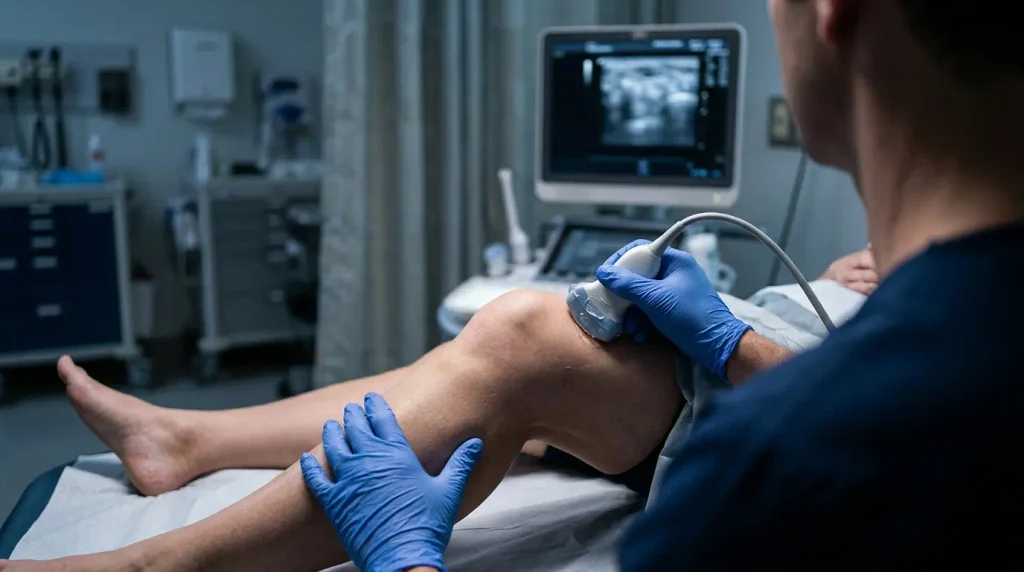
Examination is the first step. A clinician looks for loss of the normal hollows, tests for a fluid wave and checks warmth. Ultrasound then shows the fluid clearly and measures how much is present. X-rays show bone changes but are poor at showing fluid.
Imaging also helps to plan any needle procedure safely. Fluid pockets can be located precisely, which avoids blind attempts.
Common Causes of Fluid in the Knee
Several conditions can fill the knee with fluid. Injury, such as a ligament or meniscus tear, is a frequent trigger. Osteoarthritis is the most common cause when no injury has occurred. Gout, pseudogout and inflammatory arthritis can also produce effusion. Infection is less common but far more urgent.
Each cause needs different care. A hot, red, rapidly swollen knee belongs in a different category. A mild, stiff, achy swelling that builds gradually points elsewhere.
Why Effusion Is Common in Knee Osteoarthritis
Osteoarthritis changes the whole joint, not only the cartilage. The lining of the knee reacts to this wear and produces extra fluid. Knee effusion in osteoarthritis is therefore a common pairing in clinics, particularly after busy days.
The Role of the Joint Lining
The synovium is the thin lining inside the joint capsule. In osteoarthritis, this lining can become inflamed. Doctors call this knee synovitis. An inflamed lining makes more fluid than the joint can comfortably handle.
Fluid then stretches the capsule, which adds tightness and pain. Movement drops, and the knee feels stiff after sitting.
Everyday Flare-Ups
Fluid levels often rise and fall. A long walk, a garden day or a heavy shop can trigger a flare. Rest and gentle movement usually calm things down. Recurring knee swelling and osteoarthritis flares should always be reported to a clinician.
Many patients describe water on the knee osteoarthritis as a daily negotiation. Good days and bad days alternate. The causes and home care of fluid collecting inside the knee joint differ from case to case.
What Arthrosamid Is and How It Works
Arthrosamid is a hydrogel designed for adults with symptomatic knee osteoarthritis. The gel is placed inside the joint through a single injection. It is intended to cushion the knee and ease pain.
The Hydrogel Itself
The gel contains 2.5% cross-linked polyacrylamide and 97.5% water. This polyacrylamide hydrogel is non-biodegradable, so the body does not break it down. After injection, the gel integrates with the synovial lining of the joint. The exact mechanism is still being studied.
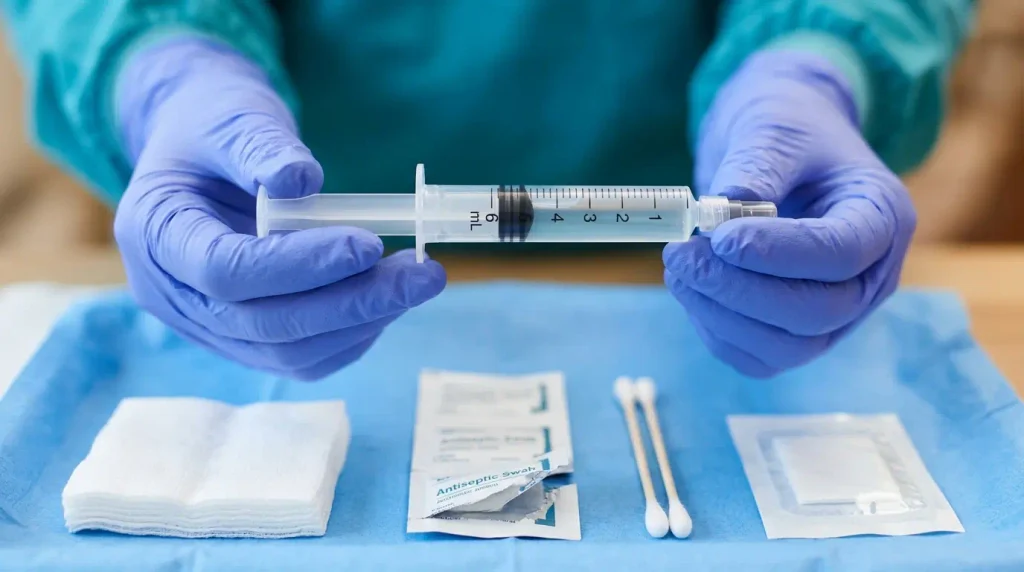
A standard Arthrosamid injection is a single 6 mL dose. It is given under ultrasound guidance with local anaesthetic. Antibiotics are usually given beforehand. The gel stays in the joint, so infection prevention is taken seriously.
Careful patient selection matters just as much as injection technique.
What Arthrosamid Does Not Do
Arthrosamid injection treats symptoms. It does not rebuild cartilage, and it does not cure osteoarthritis. Severe, end-stage disease often responds better to other options, including surgery.
A specialist assessment decides who fits the treatment. Effusion is one of the factors considered during that assessment.
Who May Be Suitable When Fluid Is Present
Suitability depends on the whole knee, not on fluid alone. Specialists weigh symptoms, imaging, function and personal goals together. Arthrosamid knee effusion is only one clue among many.
Typical Candidates
Arthrosamid is usually considered for mild to moderate osteoarthritis. Pain persists despite physiotherapy, weight management and simple painkillers. Steroid or hyaluronic acid injections may already have been tried without lasting benefit.
Effusion often accompanies this stage of disease. Its presence does not automatically rule out treatment.
Less Suitable Situations
Severe, bone-on-bone osteoarthritis is usually a poorer fit. Active infection is a firm stop. A knee that needs replacement should not receive a gel as a substitute.
An honest assessment protects patients better than an optimistic one.
Why Arthrosamid Knee Effusion Is Checked Before Treatment
Fluid in the knee changes how the injection is planned. Manufacturer patient information advises removing joint effusion, if present, before the gel is injected. Clinicians therefore examine and scan the knee before treatment starts.
Draining Excess Fluid First
Arthrosamid knee effusion is usually managed by draining the excess fluid at the start of the procedure. The fluid is removed under ultrasound guidance. Knee aspiration is a routine technique in joint clinics.
A full, tense joint is harder to inject accurately. Draining first also gives the clinician a clearer view of the joint. Many UK clinics describe the same routine on their Arthrosamid pages. Excess fluid comes out first, and then the gel goes in.
Aspiration is not unique to this treatment. Steroid injections are often given after aspiration too.
When Treatment Must Wait
Some knees are not ready for injection. Arthrosamid should not be given into an infected or severely inflamed joint. Active skin disease or infection near the injection site is another reason to stop.
A hot, red, rapidly swollen knee needs a diagnosis first. Arthrosamid knee effusion with fever or intense heat is never a reason to push ahead. Gout, pseudogout and infection can all cause effusion. Treating the wrong problem with a hydrogel helps nobody.
Preparing for the Appointment
A little preparation makes the consultation far more useful. Clinicians decide faster when the history is clear, and the questions are ready.
Information Worth Sharing
A swelling diary helps. Notes on when the knee puffs up, how long it lasts and what triggered it all matter. Previous steroid or hyaluronic acid injections should be mentioned. Manufacturer guidance asks for hyaluronic acid to be absorbed before the gel goes in, so timing counts.
Medication lists matter as well. Blood thinners affect bleeding risk, and some may need adjusting under medical advice. Allergies, recent infections and skin problems near the knee also belong in the conversation. Poorly controlled diabetes can call for extra care.
Questions Worth Asking
Patients can ask whether fluid will be drained and whether a sample will go to the laboratory. Another useful question is which swelling is expected and which is not. Asking who answers the phone out of hours is sensible too. Follow-up timing and activity limits round out the list.
Clear answers before treatment prevent confusion afterwards. A written aftercare sheet is a welcome extra.

What Happens During the Procedure
The procedure is usually short and takes place in an outpatient room. Ultrasound guides every step. The aim is to place the gel accurately and safely.
Step by Step
The skin is cleaned with antiseptic, and local anaesthetic numbs the area. Excess fluid, if present, is drawn off through the needle. The same needle can stay in place for the whole procedure. The hydrogel is then injected slowly into the joint. A small plaster covers the site afterwards.
Joint aspiration before injection is therefore a normal part of the visit when effusion is present. Most patients walk out of the clinic the same day.
Fluid Analysis When the Cause Is Unclear
Aspirated fluid can be sent to a laboratory when the cause of swelling is uncertain. Analysis helps to separate infection, gout, pseudogout and inflammatory arthritis from simple wear-related effusion. Colour and clarity give clinicians an early clue as well.
Clear, straw-coloured fluid points in a very different direction from cloudy or bloody fluid. Knee fluid drainage therefore serves two purposes: treatment and information.
Swelling After Injection and What Counts as Normal
Some swelling after treatment is expected. The joint has just received a needle and a gel. A mild reaction is common and usually settles.
Expected Early Reactions
Reported early effects include pain, swelling, warmth, stiffness and a feeling of fullness. Temporary effusion has also been reported after treatment. Bruising or tenderness at the injection site is common too.
These Arthrosamid side effects are generally mild and short-lived. Arthrosamid swelling in this early phase usually reflects the joint reacting to the procedure.
Timeline for Settling
Most clinics describe mild swelling settling within days to a few weeks. Pain relief builds gradually rather than instantly. Many patients notice benefit from around four weeks, and the full effect may take longer.
Arthrosamid recovery therefore feels slow at first. A swollen knee after Arthrosamid can look dramatic on day two and calmer by week two.
Why Responses Differ
Individual response varies widely. A knee that was heavily swollen before treatment may react more noticeably. Activity levels in the first days also play a part. Treating both knees at once means two joints to monitor, so aftercare needs extra attention.
Flare-Ups in the First Fortnight
Some patients report a sharper flare soon after treatment. An Arthrosamid flare-up brings stiffness and soreness, and sometimes more fluid.
A flare that settles is reassuring, while a flare that keeps building needs review. Reporting the pattern early helps the clinician judge which category applies.
Warning Signs That Need Urgent Review
Most swelling after injection is harmless. A small group of symptoms is not. These need same-day medical advice.
Symptoms That Should Not Wait
Fever or chills point towards infection. So do severe or rapidly worsening pain and a hot, red knee. Fast-growing swelling, discharge from the injection site and inability to bear weight also need review. Feeling generally unwell completes the list.
Joint infection, called septic arthritis, is a medical emergency. The risk of an arthrodesis infection is rare, but it matters because the gel is non-absorbable. A complication can be harder to manage and may need prolonged treatment or surgery.
Telling Other Clinicians
Any doctor treating the knee should know about the implant. Mentioning the gel at every appointment, including emergency visits, supports accurate assessment. Fluid results then make sense in the right context.
Persistent Swelling After the First Few Weeks
Arthrosamid knee effusion that lingers beyond the expected window deserves a proper look. Persistent inflammation or prolonged pain after several weeks has been reported as a possible problem. A review is the sensible next step, not waiting and worrying.
Possible Explanations
Persistent knee swelling after injection can have several explanations. The joint lining may remain irritated. Underlying osteoarthritis may simply be flaring.
A fluid-filled swelling behind the knee, known as a Baker’s cyst, has also been listed among possible effects. Arthrosamid Baker’s cyst concerns are best reviewed with ultrasound.
What a Review Involves
A clinician examines the knee, checks temperature and range of movement, and often arranges ultrasound. Further fluid sampling may follow when infection or crystal arthritis needs to be excluded. Treatment then targets the actual cause.
Pain that returns without any swelling raises a different question. That situation is covered in “What to Do When a First Knee Injection Does Not Work.”
Aftercare Tips for a Swollen Knee
Good aftercare keeps minor swelling minor. Clinic instructions always come first. The points below suit most routine recoveries.
Activity in the First Days
Strenuous weight-bearing, such as running, tennis or long walks, is best avoided for the first few days. Complete bed rest is not advised either. Gentle walking and light movement keep the joint from stiffening. Return to sport follows the clinician’s advice.
Comfort Measures
Ice packs wrapped in a cloth can ease soreness and swelling. Simple painkillers help when the clinician agrees they are suitable. Regular medication usually continues as normal unless advised otherwise. Raising the leg on a stool also takes pressure off a puffy knee.
Arthrosamid aftercare is mostly common sense. Educational video content on non-surgical joint pain care is available on the Dr SNA Clinic YouTube channel.
Keeping Follow-Up Appointments
Follow-up lets the clinician check the early response. Some clinics review at around six weeks. Swelling, pain scores and mobility are all reviewed. Attendance matters even when the knee feels better.
How Effusion, Swelling and Arthrosamid Connect
Effusion is the underlying problem, and swelling is what patients notice. Arthrosamid is one possible treatment for the osteoarthritis behind both. The link runs in two directions. Fluid shapes how the injection is planned. The injection then shapes how the joint swells and settles.
Before treatment, effusion is drained and assessed. After treatment, mild swelling is expected and monitored. Warning signs separate routine recovery from complications. Persistent fluid triggers review rather than reassurance alone.
Each step follows the same principle. Fluid is information, not just an inconvenience.
Frequently Asked Questions
Can Arthrosamid be injected into a knee with fluid?
Yes, in suitable cases. Excess fluid is usually drained first, as the manufacturer’s patient information advises. An infected or severely inflamed joint is the exception, and treatment waits in that case. The treating clinician decides after examination and ultrasound.
Is swelling normal after an Arthrosamid injection?
Mild swelling is common and usually settles within days to a few weeks. Warmth, stiffness and soreness often accompany it. Increasing pain, heat, redness or fever is different and needs prompt review. Early advice is always better than waiting.
How long does knee swelling last after Arthrosamid?
Timing varies between patients. Many clinics describe settling within days to a few weeks. Swelling that persists beyond that window deserves assessment. Ultrasound can show whether fluid or a cyst is responsible.
Does draining fluid from the knee hurt?
The skin is numbed first, so the procedure is usually well tolerated. Discomfort varies between patients. Removing fluid often reduces the tight feeling in the knee.
Can fluid come back after Arthrosamid?
Fluid can return, especially if osteoarthritis flares or the joint lining stays irritated. Occasional mild swelling after busy days is common. Frequent or growing swelling needs review. Hot, red or feverish episodes need urgent assessment.
Does Arthrosamid knee effusion mean the treatment has failed?
Not necessarily. Mild fluid after treatment is a recognised early reaction, and it often settles. Persistent or growing swelling still needs review, because causes range from irritation to infection. The clinician decides whether the response is routine or needs further tests.
Is Arthrosamid suitable for severe osteoarthritis with a lot of fluid?
Severe, end-stage osteoarthritis often responds better to other options, including surgery. Fluid alone does not rule out treatment. Suitability depends on imaging, symptoms, function and personal goals. Specialist assessment settles the question.
Arthrosamid knee effusion affects every stage of treatment, from planning to recovery. Excess fluid is drained before the gel goes in, and an infected or severely inflamed joint must wait. Mild swelling afterwards usually settles, while heat, fever or severe pain needs urgent review. Persistent swelling calls for assessment rather than waiting.
Mr Syed Nadeem Abbas is a non-surgical knee and joint pain specialist.
Read more: Travelling for Arthrosamid: What Patients Should Plan Before a London Visit
Read more: Water on the knee is a warning sign that needs its cause found