✅ Medically reviewed
Plantar fasciitis and knee pain often appear together because the foot and knee work as one connected system. Plantar fasciitis irritates the thick band of tissue running from the heel bone to the toes. That band supports the arch and absorbs shock with every step. When it hurts, walking changes. The body shortens the stride, rolls off the foot early and avoids heel pressure. The knee then absorbs forces it was never built to carry. Over weeks or months, this extra load can produce an ache on the same side as the sore heel. Understanding this chain explains why treating only the knee sometimes fails.
What Is Plantar Fasciitis?
The plantar fascia is a strong band of tissue under the foot. It stretches from the heel to the base of the toes. Plantar fasciitis develops when repeated strain irritates this band and causes tiny tears near the heel.
The name suggests plantar fasciitis inflammation. Research now points more to tissue strain and wear than pure inflammation. The condition is one of the most common causes of heel pain in adults. It affects runners, but also teachers, nurses, office workers and anyone standing for long shifts.
Risk rises with age, particularly between 40 and 60. Excess body weight, sudden increases in exercise and unsupportive shoes add further strain.
Common Symptoms of Plantar Fasciitis
Symptoms usually build gradually. The most typical pattern includes:
- Morning heel pain that feels sharp during the first steps after waking
- Pain returning after a long period of sitting
- Tenderness on the inner side of the heel
- A stiff, tight sensation along the arch
- Limping with heel pain after exercise or a long day on the feet
Pain often eases once the foot warms up. It then returns by evening. This on-and-off rhythm is a useful clue. The heel, it seems, enjoys a dramatic morning entrance.
The Biomechanical Link Between Foot Pain and Knee Pain
Foot pain and knee pain look unrelated on the surface. Mechanically, they share a single movement system. Each step begins at the foot and travels upward through the ankle, knee and hip. A problem at the start of this sequence changes everything that follows.

The Kinetic Chain Explained
The body works as a kinetic chain. Foot, ankle, knee, hip and spine pass force upward from the ground. A fault at one link changes the forces at the next.
Kinetic chain knee pain arises when a faulty foot alters the forces travelling upward. A stiff or painful heel changes ankle motion first. The shin then rotates differently. The knee joint has no choice but to follow.
Stress on the Knee Joint
The knee handles repeated loading all day. Healthy alignment spreads that load evenly across the joint surfaces. Poor foot mechanics shift pressure onto one side. Joint surfaces, ligaments and tendons all share this load, so imbalance affects several structures at once. The inner knee and the area around the kneecap usually take the strain.
Repeated overload irritates knee tissue long before any structural damage appears. Early symptoms include dull aching, stiffness after sitting and discomfort on stairs.
Can Plantar Fasciitis Cause Knee Pain? Four Common Pathways
Yes, but indirectly. The plantar fascia does not spread pain upward. The change in movement does the damage. Plantar fasciitis causing knee pain happens through mechanics, not through direct spread of irritation.
Altered Gait
Heel pain pushes people to avoid a full heel strike. Steps shorten. The foot rolls off the ground early. The knee stays slightly bent to soften every landing.
An altered gait of this kind overloads the thigh muscles and the front of the knee. Weeks of this pattern can create gait and knee pain complaints that linger after the heel settles.
Calf and Achilles Tightness
The plantar fascia and the Achilles tendon connect at the heel. Tight calf muscles pull on both structures. Reduced ankle flexibility then forces the foot to flatten early and the knee to twist.
Calf tightness and knee pain therefore often travel together. Achilles tightness raises tension in the plantar fascia even further. Stretching the calf often helps the heel and the knee at once.
Flat Feet and Inward Foot Roll
Overpronation means the foot rolls inward too far. The arch collapses, and the shin rotates inward. The knee follows, and pressure rises on the inner joint.
Large population studies have linked flat feet and knee pain, although cause and effect remain debated. Foot arch problems, whether low or high, also change how well the foot absorbs shock.
Compensatory Movement
The body protects a sore heel automatically. Weight shifts to the other leg, the hip tilts, and the trunk leans. Compensatory movement knee pain develops when these shortcuts load the knee repeatedly.
The opposite leg can suffer as well. Protecting one painful limb often overloads the other.
When the Knee Is the Primary Problem
The connection works in both directions. Knee osteoarthritis, for example, causes stiffness and weak thigh muscles. Pain then changes the walking pattern. The altered pattern loads the foot in new ways, and heel pain may follow.

Knee pain from foot problems is therefore only half the picture. Sometimes the knee drives the foot, and sometimes the foot drives the knee. A clinical assessment separates the two.
Pain around the kneecap deserves special mention. Patellofemoral pain syndrome produces an ache at the front of the knee, worse on stairs and after sitting. Runner’s knee is a common name for this pattern in active adults. Foot motion often contributes.
Signs Plantar Fasciitis Is Causing Knee Pain
Certain patterns point to the foot as the source. These clues help guide the assessment:
- Heel pain started first, and the knee ache followed weeks later
- Plantar fasciitis knee pain same-side presentation, with both problems in one leg
- Knee discomfort that peaks after rest and eases with gentle movement
- A tight calf or a stiff ankle on the affected leg
- Uneven shoe wear, often along the inner edge of the sole
- Knee symptoms that improve when heel pain settles
Several of these signs together make a foot-driven problem more likely. No single sign confirms it. A specialist examination remains the only reliable way to tell. Early recognition of plantar fasciitis and knee pain together allows the right treatment to start sooner.
Who Is Most at Risk?
Some groups face a higher chance of developing both problems:
- Adults aged 40 to 60
- People who stand or walk for long hours
- Runners who increase mileage quickly
- People with flat feet or very high arches
- Those carrying excess body weight
- Anyone with existing knee osteoarthritis
Footwear matters too. Worn trainers lose cushioning long before the upper looks tired.
Treatment for Plantar Fasciitis and Knee Pain
Plantar fasciitis and knee pain respond best when assessed together. A joint plan usually starts with symptom control, then moves to mobility, strength and footwear. Most people notice change over several weeks rather than days.
Effective care treats the whole chain. Treating only the knee ignores the likely trigger. Treating only the heel ignores the load already built up in the joint.
Load Management and Rest
Complete rest rarely helps. Reduced loading does. Swapping long runs for cycling or swimming keeps fitness steady while the fascia recovers. Gradual return to walking works better than a sudden restart. Pain guides progress. Mild discomfort during activity is acceptable, but sharp pain signals the need to scale back.
Stretching and Strengthening
Calf stretches against a wall ease tension at the heel. Plantar fascia stretches, performed before the first morning steps, often reduce early pain. Strengthening the thigh and hip muscles then protects the knee while the foot recovers.
Shoe Inserts, Orthotics and Supportive Footwear
Footwear changes are among the simplest steps. The evidence needs honest explanation, though.
Insoles for plantar fasciitis show modest short-term benefit for heel pain in many studies. Shoe inserts for knee pain have mixed evidence, with benefit varying between individuals. Orthotics for knee pain may help people with flat feet, but results in knee osteoarthritis remain modest.
Good supportive footwear for knee pain has a firm heel, cushioned midsole and stable arch. Inserts redistribute load. They do not cure either condition. Inserts work best as one part of a wider plan.
Physiotherapy
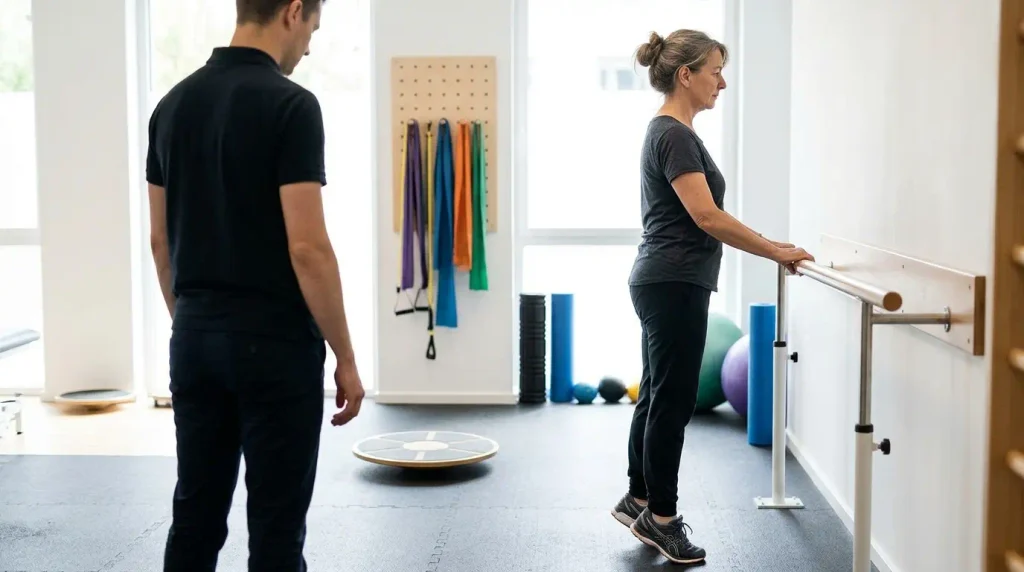
Physiotherapy for knee pain extends beyond the knee itself. A physiotherapist assesses walking pattern, calf flexibility, hip strength and foot posture. Gait retraining and targeted strengthening then address the root cause rather than the symptom. Sessions often include calf raises, hip strengthening and balance work, which improve control through the whole leg.
Non-Surgical Specialist Care
Non-surgical knee pain treatment covers a wide range of options. These include structured exercise, activity advice, medication and image-guided injections. Where knee osteoarthritis is the underlying driver, specialists may discuss Arthrosamid injection as one non-surgical option. Treatment of the foot problem continues alongside. A specialist also reviews walking pattern, footwear and activity levels, because these shape how well any treatment works.
How to Prevent Plantar Fasciitis
Prevention starts with load control and good habits:
- Increase exercise volume by small steps each week
- Replace worn trainers regularly
- Stretch calves daily, especially after exercise
- Maintain a healthy body weight
- Avoid long periods barefoot on hard floors
- Build strength in the foot, calf and hip muscles
To prevent plantar fasciitis reliably, small habits repeated daily matter more than occasional intense effort. Cushioned shoes at home, a short calf stretch after coffee, and regular desk breaks all lower fascia strain. Small changes protect the knee as well.
When to See a Doctor for Knee Pain
Self-care suits mild cases. Some signs call for prompt assessment:
- Knee swelling that appears suddenly
- Locking, catching or giving way
- Pain at night or at rest
- Inability to bear weight
- Numbness or tingling in the foot
- No improvement after six weeks of sensible self-care
Further education on non-surgical joint pain and arthritis care helps patients make confident decisions about treatment. Early assessment stops small mechanical faults from becoming long-term problems.
FAQs
Can plantar fasciitis cause knee pain?
Yes, but indirectly. The plantar fascia itself does not spread pain upward. Heel pain changes walking, and the knee absorbs the extra load. The knee usually aches on the same side as the sore heel.
Why do heel pain and knee pain appear in the same leg?
A painful heel alters stride length and foot rotation. These changes shift pressure onto the knee. Tight calf muscles and low arches often add to the strain. Pain in both areas on one side usually signals a shared mechanical cause.
Do shoe inserts for knee pain actually work?
Results vary between individuals. Insoles help some people with flat feet or heel strain. Evidence in knee osteoarthritis is modest, so inserts work best alongside exercise. A physiotherapist or podiatrist can advise whether an off-the-shelf or custom option suits the foot.
How long does foot-related knee pain take to settle?
Most mild cases improve within six to twelve weeks of sensible care. Calf stretching and footwear changes often speed recovery. Heel pain usually settles first, and the knee follows more slowly. Persistent symptoms deserve specialist review.
Is physiotherapy for knee pain useful when the heel is the trigger?
Yes. A physiotherapist checks gait, calf flexibility and hip strength together. Exercises then target the weak or tight link in the chain. Treating the whole leg gives better results than treating the knee alone.
Can walking make the problem worse?
Short, comfortable walks usually help recovery. Long walks in worn shoes can aggravate both heel and knee. Hard, flat surfaces add further load to the arch. Pacing activity and wearing cushioned footwear reduce flare-ups.
Is rest or exercise better for plantar fasciitis and knee pain?
Gentle, controlled exercise usually beats complete rest. Cycling and swimming maintain fitness without heavy heel impact. Stretching and strengthening then gradually rebuild tolerance. Sharp pain or swelling means activity needs reducing and assessment is wise.
Plantar fasciitis and knee pain connect through altered walking, tight calves and poor foot mechanics. Treating the foot and knee together gives the best chance of lasting relief. Persistent or worsening symptoms warrant specialist assessment. Mr Syed Nadeem Abbas is a consultant specialising in non-surgical knee and joint pain.
Read more: Tricompartmental Osteoarthritis Knee Pain Affects All Three Compartments of the Joint
Read more: Arthrosamid vs genicular nerve ablation comes down to how each treats knee pain