✅ Medically reviewed
Knee osteotomy is a surgical procedure that cuts and reshapes the shinbone or thighbone. The aim is to move body weight away from a worn part of the joint. Surgeons call this knee realignment surgery because it corrects leg angle rather than replacing the joint.
Many patients with early wear hear two options: wait or replace. Osteotomy sits between them. It suits specific leg shapes and arthritis patterns, so careful selection matters more than surgical technique.
How Knee Realignment Surgery Shifts Weight Off a Worn Joint
Every knee carries load along a straight line from hip to ankle. When that line drifts, one side of the joint takes too much stress. Realignment corrects the drift and spreads the load again.
The Mechanical Axis and Why It Matters
The mechanical axis is an imaginary line from the centre of the hip to the centre of the ankle. In a healthy leg, the line passes close to the middle of the knee. Weight then spreads evenly across both sides of the joint.
Think of a wonky shopping trolley. One wheel takes all the strain until someone fixes the angle. A knee under constant one-sided load behaves the same way, and the cartilage on that side wears faster.
Even a small shift in the line changes pressure inside the joint. Over many years, that extra pressure thins the cartilage on the overloaded side. Pain, stiffness and swelling usually follow.
How Leg Alignment Decides Where Cartilage Wears
Bow-legged knees press on the inner side of the joint. Knock-kneed knees press on the outer side. Doctors use the terms varus and valgus for these two patterns.
Surgeons favour early-stage arthritis for realignment, because the damaged side still holds some cartilage. Moving the load gives that side room to cope. The goal is joint preservation, not a cure.
Video explainers on the Dr SNA Clinic YouTube channel cover how knee osteoarthritis develops and why the joint hurts. They give useful background before any surgical discussion.
A Short History of Realigning Bone
Surgeons have reshaped bone to correct alignment for more than a century. Early versions relied on simple fixation and long periods in casts. Results varied, and recovery dragged on.
Modern imaging, digital planning and stronger plates changed that picture. Surgeons now measure the deformity precisely and fix the bone firmly. Better planning has made osteotomy more predictable than it was a generation ago. Careful selection still decides who benefits.
Types of Knee Osteotomy and What Each One Corrects
Surgeons choose the cut by the location of the deformity. Four procedures cover most cases. Each one targets a different bone, a different problem, or both.
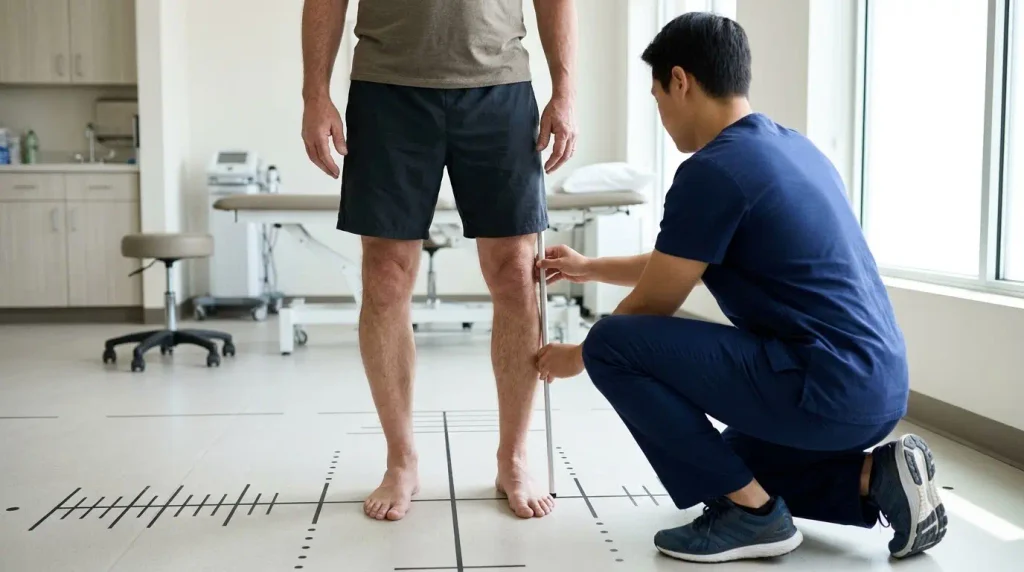
High Tibial Osteotomy (HTO) for the Inner Knee
High tibial osteotomy is the most common realignment procedure. The surgeon cuts the upper shinbone, just below the joint. It suits bow-legged patients whose inner side is worn. The correction moves load to the healthier outer side.
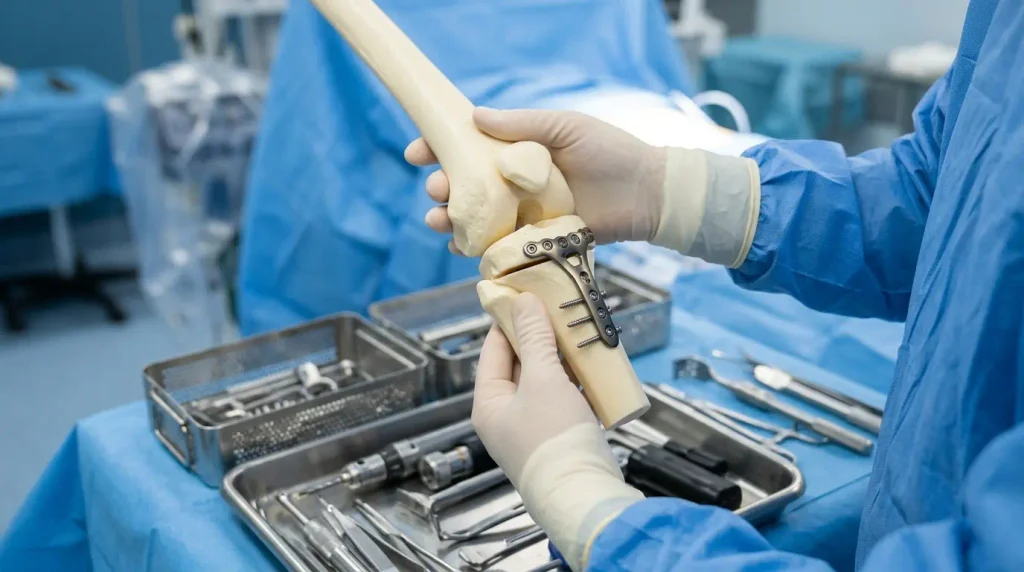
Surgeons usually choose the opening wedge osteotomy. The surgeon splits the bone and opens a small gap. A plate and screws hold the new angle, and graft material often fills the gap. The alternative removes a small wedge of bone and closes the gap instead.
Pain location offers a clue, since different types of knee pain point to different compartments. Surgeons still confirm the pattern with imaging before planning any cut.
Distal Femoral Osteotomy (DFO) for the Outer Knee
Distal femoral osteotomy treats the opposite problem. The cut sits in the lower thighbone, just above the joint. It suits knock-kneed patients whose outer side carries too much load. The correction moves weight back to the centre of the knee.
Surgeons may open or close a wedge here, depending on the deformity and the surgical plan. A plate holds the bone steady while it heals.
Tibial Tubercle Osteotomy for Kneecap Problems
Tibial tubercle osteotomy works differently. The tubercle is the bony bump where the kneecap tendon attaches. Surgeons move it to steady the kneecap or reduce pressure behind it. This procedure targets the kneecap, not the overall angle of the leg.
Patients with repeated kneecap dislocation or kneecap-related wear are the usual candidates. Some patients need it alongside other procedures.
Double-Level Osteotomy (DTO) for Complex Deformity
Double-level osteotomy combines a femoral cut with a tibial cut. Surgeons use it when both bones add to the deformity. Correcting one bone alone could tilt the joint line and create new stress.
Two smaller corrections keep the joint surface level. Some surgeons call this approach a double osteotomy. It is the most demanding option, so it suits experienced surgical teams and carefully chosen patients.
Who Makes a Good Candidate for Surgery
Selection shapes the outcome of knee osteotomy more than any surgical detail. The best results come from a clear wear pattern and a correctable leg shape. Careful assessment separates suitable patients from those better served elsewhere.
Features That Favour Realignment
Younger, active patients form the core group. Their joints still hold enough healthy cartilage to gain from a load shift. Common features include:
- Wear confined to one side of the knee
- Early-stage arthritis with cartilage left on the healthier side
- A clear deformity of leg shape on standing X-rays
- Good knee movement and stable ligaments
- Habits and weight that support bone healing
Surgeons confirm these features with standing X-rays and sometimes a full-length leg scan. The images show exactly how much correction the leg needs.
When Another Route Suits Better
Arthritis across all three compartments of the joint rarely responds to realignment. Inflammatory arthritis, severe stiffness and heavy smoking also lower the chance of success.
Older patients with advanced wear often do better with a knee replacement. Surgeons weigh age, activity level and expectations alongside the X-rays. A good candidate on paper still needs the motivation to complete months of rehabilitation.
Questions Worth Asking Before Surgery
A consultation works best with a prepared list. Useful topics include the planned type of cut and the expected correction. Patients should ask how the surgeon fixes the bone and when loading starts. Questions about surgeon experience, complication rates and realistic recovery targets also help.
Second opinions are reasonable for any major operation. A different specialist may read the same X-rays and suggest a different route. Written answers make later decisions easier and calmer.
What Happens During Surgery and Recovery
Surgery takes place under anaesthesia, with imaging to check each step. Recovery depends on the type of cut and the fixation used. Patience pays here, because bone heals on its own schedule and ignores holiday bookings.
Surgery Day
Planning comes first. Surgeons measure the deformity on X-rays or scans and calculate the angle of correction. They then cut the bone, move it to the planned angle, and fix it with a plate and screws.
A bone graft may fill the gap. Hospital stay varies by centre and procedure. Some patients go home the same day, while others stay a few nights.
Anaesthetic options include general anaesthetic or spinal anaesthetic with sedation. The anaesthetist agrees on the best option with the patient beforehand. Operating time varies with the type of cut and the complexity of the deformity.
Weight-Bearing and Rehabilitation Timeline
Timelines vary between surgeons, so written advice from the operating team always comes first. The phases below show the usual pattern.
Days One to Three
Pain peaks early, because the operation cuts and fixes living bone. Nerve blocks, ice and elevation control swelling. Gentle movement and early physical therapy begin as soon as the team allows.
Weeks One to Eight
Protected weight-bearing is the central rule. Some plates allow early partial loading. Others need crutches for up to eight weeks. Loading too soon can shift the correction or loosen screws. Surgeons usually review X-rays before each step up.
Fear of movement slows many patients, and graded exercise rebuilds trust in the knee. Steady, supervised progress protects the new bone angle better than heroic early effort.
Months Three to Six
Most patients wean off crutches at around three months. Low-impact exercise then builds up, including walking, cycling and swimming. Function often keeps improving through the sixth month. Running and sport return later, once the surgeon approves.
Risks Worth Knowing
Every operation carries risk. Infection, blood clots and wound problems can occur. Bone may heal slowly or fail to heal. The correction can end up slightly too large or too small.
Plates sometimes irritate the skin and need removal later. Nerve and blood-vessel injury is rare. Surgeons discuss these risks before consent, and patients should ask about them directly.
Practical Tips for a Smoother Recovery
Preparation before surgery pays off afterwards. Patients benefit from arranging help at home and setting up a ground-floor resting area. Ice, elevation, and prescribed medication keep swelling and pain under control.
Attending every review visit lets the team spot problems early. Stopping smoking before surgery supports bone healing. Small habits protect the correction long after the stitches heal.
Knee Osteotomy Compared With Replacement and Non-Surgical Care
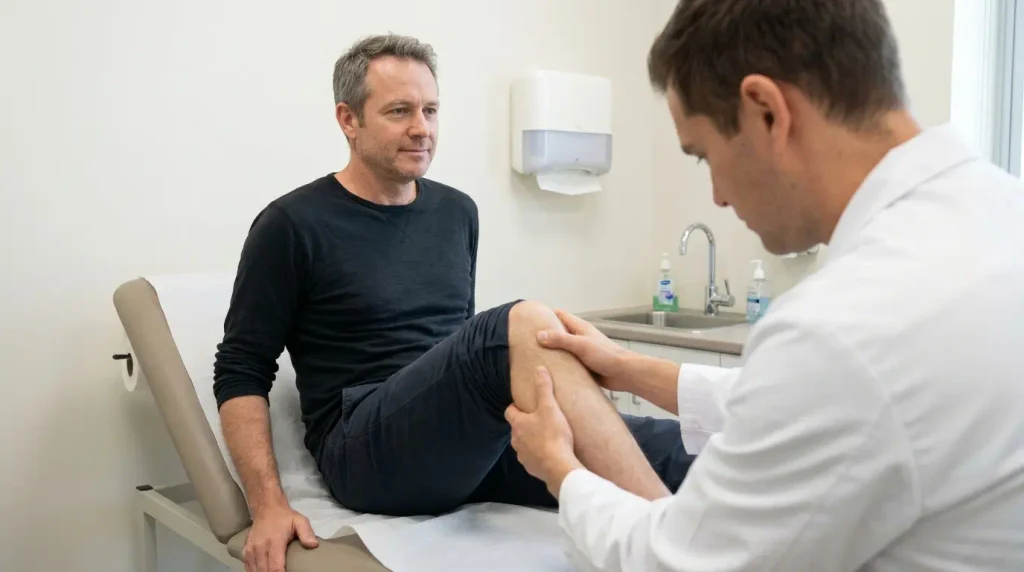
Realignment, replacement and non-surgical care solve different problems. The right choice depends on age, activity, wear pattern and personal goals. Honest comparison prevents a mismatch between expectation and result.
Osteotomy Versus Replacement
Knee osteotomy keeps the natural joint and delays further wear. A knee replacement swaps worn surfaces for implants and suits advanced disease.
Osteotomy often allows higher activity afterwards, though recovery takes longer to settle. A replacement usually relieves pain more predictably in advanced wear. Many osteotomy patients still need a replacement later. That outcome still counts as success, because the operation bought valuable time.
Age often tilts the balance. Younger patients usually favour keeping the natural joint, because implants wear out over time. Older patients often value a quicker and more predictable recovery.
Non-Surgical Options for Knee Arthritis
Knee arthritis treatment starts with exercise, weight management, pacing and pain relief. Physiotherapy builds strength around the joint. Injections help selected patients.
A single-injection hydrogel treatment such as Arthrosamid injection suits some patients with knee osteoarthritis. It does not reverse joint damage or change leg shape, and results vary. Non-surgical care cannot realign a bent leg, but it can ease symptoms while the decision matures.
Frequently Asked Questions
How long does recovery take after knee osteotomy?
Most patients walk without crutches at around three months. Full recovery of strength and function often takes four to six months. Bone healing sets the pace, and the surgeon decides when each step is safe. Physical therapy supports every stage.
Does HTO surgery hurt afterwards?
Pain peaks in the first few days. Nerve blocks and prescribed medication keep it manageable. Ice, elevation and early movement reduce swelling, which drives much of the discomfort. Pain usually settles steadily over the following weeks.
Does every opening wedge procedure need a bone graft?
Not always. Some surgeons use graft material, while others rely on specialised plates and natural healing. The choice depends on gap size and surgeon preference. The operating surgeon explains the plan before surgery.
Can knee osteotomy be avoided with non-surgical care?
Some patients manage well with exercise, weight control and drug-free knee pain relief habits. Those steps do not correct leg shape, but they can reduce symptoms. Surgery enters the discussion when pain persists despite good non-surgical care.
How do doctors decide whether realignment suits a patient?
Doctors begin with a clinical assessment, then add standing X-rays and sometimes an MRI scan. They measure the angle of the leg and check which side of the joint has worn. Age, activity and goals complete the picture.
Will a later replacement still be possible after realignment?
Yes, a replacement remains possible in most cases. Earlier surgery can make it technically harder. Surgeons plan with this future step in mind. Many patients gain several comfortable years first.
Can patients return to sport after realignment?
Many patients return to low-impact activity such as cycling and swimming. Running and contact sport depend on the type of cut, bone healing and surgeon advice. Some surgeons advise against high-impact sport in the long term. The surgeon sets individual limits after reviewing X-rays.
Does the plate always need removal?
Not always. Many patients keep the plate without problems. Some choose removal later if the hardware irritates the skin or tendons. That decision usually waits until the bone has fully healed.
Knee osteotomy suits a narrow but important group of patients. It moves load off a worn compartment and can delay further wear. Success depends on the right leg shape, the right pattern of arthritis and committed rehabilitation. Non-surgical care and replacement remain valid routes for other patients.
Mr Syed Nadeem Abbas, a non-surgical knee and joint pain specialist, assesses knee osteoarthritis and reviews non-surgical treatment options. Book a private consultation to discuss the best next step for the knee.
Read more: Medial vs lateral knee osteoarthritis can both be considered for Arthrosamid
Read more: Travelling for Arthrosamid: What Patients Should Plan Before a London Visit