✅ Medically reviewed
Housemaid’s knee symptoms centre on a soft, tender swelling at the front of the knee, just over the kneecap. The swelling appears when a small fluid-filled cushion, the prepatellar bursa, becomes inflamed. Prolonged kneeling is the classic trigger, which explains the old-fashioned name. A fall onto the knee, an infection or an inflammatory joint disease can set it off too.
Most cases settle within a few weeks with simple care. A minority involve infection, and that version needs prompt medical attention. Spotting the difference early protects the knee and spares a lot of worry.
What Is the Prepatellar Bursa and Why Does It Swell
Bursae are small, fluid-filled sacs that reduce friction between moving tissues. The knee contains several of them. Each one acts like a tiny slippery pillow.
The first bursa sits between the skin and the kneecap. It lets the skin glide smoothly over bone during bending and kneeling. Of the four main knee bursae, this one is the most commonly inflamed.
When the bursa is bruised, irritated or infected, it makes extra fluid, and its lining thickens. The result is a visible, tender lump. Doctors call this prepatellar bursitis. Any age can be affected, although males are affected more often.
Other forms of knee bursitis cause pain below the kneecap or on the inner side of the knee. Location is the main clue. Swelling directly over the kneecap points to the front-of-knee bursa.
Because this bursa lies just under the skin, even small swellings are easy to see and feel. That is why it produces such obvious lumps compared with deeper joint problems.
Housemaid’s Knee Symptoms: The Early Signs to Recognise
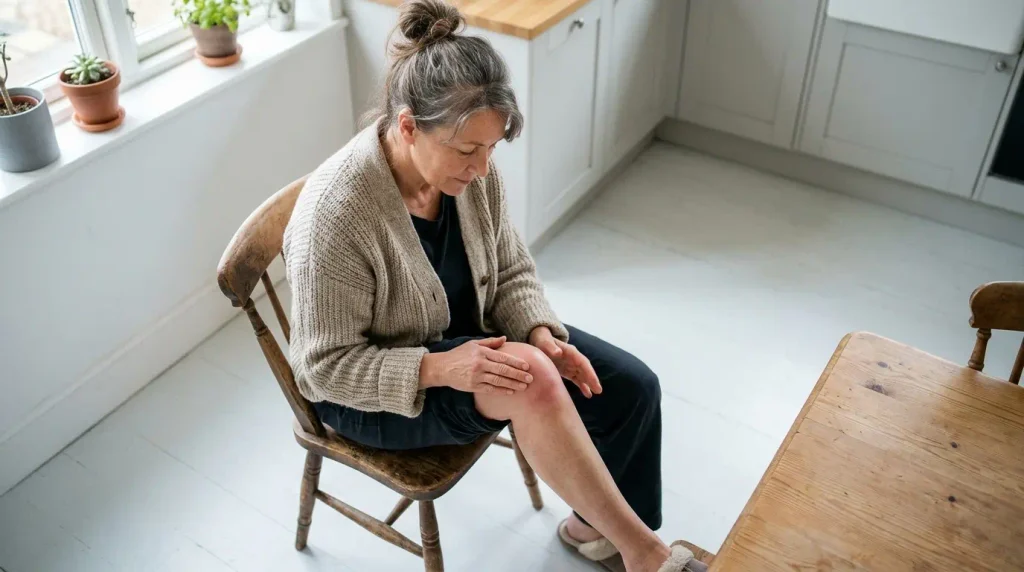
Pain levels range from mild tenderness to sharp discomfort. Some people notice the lump first, while others notice the pain first. Housemaid’s knee symptoms usually build over days or weeks of repeated kneeling. A sudden knock can produce them within hours.
Swelling and Pain Over the Kneecap
The hallmark sign is swelling at the front of the knee. It often feels soft and squishy, like a small egg sitting on the kneecap. The skin over it may look stretched and shiny. Size varies widely. Some lumps are barely visible, while others grow big enough to distort the shape of the knee.
Pressing on the lump usually hurts. Knee pain when kneeling is a hallmark symptom, and rest usually eases it. The other knee makes a handy comparison, because the swelling is rarely symmetrical.
Redness, Warmth and Tenderness
Inflammation brings redness and warmth over the kneecap. The skin may feel hotter than the other knee. Tenderness is sharp when pressure lands directly on the lump. Even bedsheets and tight trousers can irritate it.
Stiffness and Trouble Bending
A swollen bursa makes deep bending painful. Kneeling, crawling and squatting all become awkward. Climbing stairs may pinch at the front of the knee. Walking on the flat is usually possible, because the main joint is not normally involved.
How Symptoms Progress Over Days and Weeks
After a knock, swelling may appear within hours. With repeated kneeling, it tends to creep up slowly. Early on, the lump may come and go with the workload.
Persistent kneecap swelling can thicken the bursa wall. The lump then feels firmer and may linger after the pain fades. Swelling that spreads around the whole joint points to water on the knee instead. That pattern needs a different work-up.
A Quick Home Check
A few simple observations help describe the problem to a doctor. Note when the swelling started and what happened beforehand. Compare the warmth of both knees using the back of the hand. Record any fever, and photograph the knee daily to track changes. These notes make a consultation faster and more accurate.
Housemaid’s Knee Causes and Risk Factors
Several triggers can inflame the bursa. Mechanical stress is the most familiar one. Infection and medical conditions add other routes.
Repeated Kneeling
The name comes from domestic workers who scrubbed floors on hands and knees. Prolonged or frequent kneeling causes repeated minor trauma over the kneecap. Carpet fitters, concrete finishers and roofers carry a higher occupational risk. Gardeners, cleaners and enthusiastic DIY fans kneel plenty too. Not every case of kneeling knee pain comes from the bursa, since tendons and cartilage can complain as well.
Sudden Injury
A fall or direct blow can bruise the bursa and trigger fluid build-up or bleeding into it. Cycling spills, icy pavements and sports collisions are typical culprits. Swelling can appear within hours of the impact.
Infection
Bacteria can enter through a cut, graze or scratch over the knee. The result is septic bursitis. Infection is a more common cause in children and in people with weakened immunity. Steroid treatment and chemotherapy can lower immunity.
Gout and Inflammatory Disease
Rheumatoid arthritis raises the risk of bursitis. Gout and similar crystal conditions, where crystals form in joints and soft tissue, raise it too. A swollen bursa with no history of kneeling or injury therefore deserves a proper check. Blood tests and fluid analysis can clarify the cause.
Other Risk Factors
Diabetes and heavy alcohol use can make infections more likely. Extra body weight adds load through the knees during kneeling. A previous episode also makes a repeat more likely, because the bursa stays sensitive.
Children and Older Adults
Children kneel and fall constantly, so cuts over the kneecap are common. Infection is a more frequent cause in this age group. Any hot, red, swollen knee in a child needs a prompt medical check.
Older adults face a different pattern. Skin thins with age, healing slows, and arthritis may already be present. A small graze can therefore become a bigger problem. Fever may be absent with infection, which makes the local signs more important.
Warning Signs of Infection That Need Urgent Care
Most swollen bursae are not infected. A few are, and those can worsen quickly. Certain warning signs separate the two.

Same-day medical review is sensible when any of these red flags appear:
- Fever, shivering or feeling generally unwell
- Redness spreading beyond the kneecap or up the leg
- Rapidly worsening pain, heat or swelling
- A cut, graze or puncture wound over the kneecap
- Complete inability to bend the knee
Cellulitis, a skin infection, can look similar. The redness covers a wider patch of skin, while a bursa infection gives a tender lump over the kneecap. Both need prompt assessment.
Delay matters because infection can spread to the joint or the bloodstream. In the UK, a GP, an urgent treatment centre or NHS 111 can arrange a same-day review. Septic bursitis needs antibiotics, so home remedies alone are never enough.
How the Swelling Differs From Other Front-of-Knee Problems
Several conditions share the front of the knee. The location and appearance of the swelling help tell them apart. A clinician confirms the diagnosis by examination.
Patellar Tendinopathy
Pain just below the kneecap that builds with jumping, squatting and running points towards patellar tendinopathy. That condition affects the tendon rather than the bursa, so swelling is usually mild. Morning stiffness and warm-up pain are typical features.
Joint Fluid and Baker’s Cyst
A swollen knee that looks puffy all around, with warmth and stiffness, suggests fluid inside the joint. The swelling spreads around the whole knee instead of sitting on the kneecap. A Baker’s cyst forms behind the knee, creating a bulge at the back rather than the front.
Fat Pad Irritation and Fractures
Fat pad irritation causes pain just below the kneecap, often after repeated knee straightening. A kneecap fracture follows a clear injury, with severe pain and difficulty straightening the leg. Either can mimic bursa swelling in the first hours after a fall. An X-ray may therefore be advised.
Osteoarthritis and Patellofemoral Pain
Osteoarthritis causes deep, aching pain with stiffness after rest and a gradual onset. Patellofemoral pain produces an ache around or behind the kneecap on stairs, without a distinct lump. Arthrosamid injection is used for knee osteoarthritis rather than bursitis, so an accurate diagnosis comes first.
How Clinicians Diagnose the Condition
Diagnosis is usually clinical. It rests on examination, work history, injury history and any other joint problems. The clinician checks warmth, tenderness and range of movement. Gentle pressure shows whether the swelling sits in the bursa or inside the joint. If infection is suspected, fluid from the bursa goes to a laboratory for culture and sensitivity testing. Imaging is generally unnecessary unless the diagnosis is unclear.
Ultrasound can show bursal fluid and separate it from a Baker’s cyst. X-rays check for a fracture after a fall. MRI helps when deeper structures need review. Blood tests can look for infection markers or crystal disease.
Treatment Options by Cause
Treatment depends on whether the bursa is infected. Non-infected cases usually respond to simple measures. Infected cases need antibiotics. Self-care is reasonable only when there is no fever, no spreading redness and no open wound.
Home Care for Non-Infected Bursitis
Supportive care forms the foundation. It means resting from kneeling, applying ice, and using knee pads or foam cushions when kneeling cannot be avoided. Ice wrapped in a cloth for 10 to 15 minutes at a time protects the skin. Physiotherapy helps when movement is reduced, and a walking aid can ease weight-bearing.
Everyday Comfort Measures
Small adjustments reduce irritation while the bursa settles. Avoid leaning on the knee or resting it on hard floors. A pillow between the knees can ease pressure during sleep when lying on one side. Some people find a loose compression sleeve helpful, provided it never feels tight or hot.
Heat is best avoided on a hot, red knee. Gentle movement within comfort keeps the knee from stiffening. Complete immobility for days can do more harm than good.
Medication
NSAIDs such as ibuprofen can ease pain and inflammation. They are not suitable for everyone, including some people with stomach ulcers, kidney disease or asthma. A pharmacist or doctor can confirm what is safe.
Aspiration and Steroid Injection
If swelling persists, a doctor may draw fluid out through a needle and inject a corticosteroid. Infection must be excluded first. Possible risks include infection, bleeding and tendon damage.
Treating Infected Bursitis
Antibiotics form the core of treatment. Oral antibiotics start while laboratory results are awaited. Severe cases need intravenous antibiotics and possible hospital admission. The choice is adjusted once culture results return. If there is no improvement after 36 to 48 hours, incision and drainage may be needed. Symptoms that fail to improve on antibiotics within about two days warrant review.
Surgery
Keyhole removal of the bursa, called bursectomy, is rare. It is a day-case procedure under local anaesthetic. Surgeons reserve it for cases that do not resolve or keep recurring. The knee functions normally after the bursa is removed.
Recovery Time and Outlook
Outlook is generally very good with appropriate treatment. Most cases clear within a few weeks. Housemaid’s knee symptoms usually fade first, while a small lump can linger longer.
Recovery depends on the cause. A simple knock tends to settle faster than a crystal-related or infected bursa. Swelling from a minor knock may ease within one to two weeks. Repeated kneeling at work can prolong it unless the padding changes.
Return to kneeling should be gradual and well padded. Short padded sessions come first, then longer ones as comfort allows. Rushing back to heavy kneeling is a common reason for a repeat.
Persistent or recurrent cases may cause long-term pain and reduced movement. Early care and padding lower that risk. Short video explainers on joint pain and arthritis education appear on the clinic’s YouTube channel.
Protecting the Knees at Work and at Home
Prevention rests on spreading the load and reducing direct pressure on the kneecap. Thick foam cushions or knee pads help during prolonged kneeling, and they are especially advised after a first episode.

Well-fitting pads should sit snugly without sliding, since a loose pad can irritate the skin and shift pressure. Small habits add up. Alternate between kneeling and standing every 15 to 20 minutes. Use a kneeling stool or garden pad. Raise work to waist height where possible. Choose long-handled tools for floors and borders. Employers can help with padded mats and task rotation for kneeling trades.
Clean any graze over the kneecap promptly to lower infection risk. Beyond padding, regular movement and sensible weight control keep the whole knee more resilient.
What Housemaid’s Knee Symptoms Mean in Medical Terms
Housemaid’s knee symptoms are the everyday description of a specific problem. Doctors record the diagnosis as prepatellar bursitis. The name describes the location, with “prepatellar” meaning in front of the kneecap.
Understanding housemaid’s knee causes explains why certain trades are hit hardest. Housemaid’s knee treatment depends on one question: is the bursa infected? Answering it early shapes every decision that follows.
When to See a Specialist
Most front-of-knee swelling needs only a GP review. Specialist assessment helps when swelling lingers beyond two weeks despite home care. It also helps when the lump returns repeatedly or leaves the knee stiff.
Knowing when to see a knee specialist and which doctor treats which problem avoids delays. A consultant can confirm the cause, rule out infection and advise on options if home care fails. Infection warning signs always take priority and need same-day care. Bringing the notes from the home check speeds up the consultation.
Frequently Asked Questions
What does housemaid’s knee feel like?
A tender, soft lump usually sits over the kneecap. The area feels sore when pressed and painful during kneeling. The skin may look red and feel warm. Bending the knee fully often feels tight.
How long do housemaid’s knee symptoms last?
Most cases clear within a few weeks with rest and padding. A small lump can linger after the pain fades. Infected or crystal-related bursitis may take longer and needs medical treatment. Swelling that persists beyond two weeks deserves a review.
Is housemaid’s knee serious?
Usually not. Most cases are mild and settle with simple care. The infected form is more serious and can spread if untreated. Fever, spreading redness or severe pain needs same-day assessment.
Can a housemaid’s knee go away on its own?
Yes, many non-infected cases settle once kneeling stops and the bursa rests. Ice and padding help the process. Repeated kneeling restarts the irritation, so relapse is common without protection. A lump that persists should be checked.
Should a swollen kneecap be drained?
Draining is not routine. A doctor may remove fluid when swelling persists or infection is suspected. Infection must be excluded before any steroid injection. Draining at home carries a real risk of infection and should be avoided.
Can kneeling jobs continue with housemaid’s knee?
Work can often continue with modifications. Thick knee pads, regular position changes and kneeling stools reduce pressure. Work should pause when swelling turns hot, red or rapidly worse. A doctor can advise on duties and timing for a return.
Housemaid’s knee symptoms mean tender swelling, redness and pain over the kneecap, usually after repeated kneeling or a knock. Most cases settle within a few weeks with rest, padding and simple pain relief. Fever, spreading redness or rapid worsening signals possible infection and requires urgent review.
Mr Syed Nadeem Abbas, a non-surgical knee and joint pain specialist, assesses persistent front-of-knee problems.
Read more: Arthrosamid Candidate Selection Follows Strict Clinical Criteria
Read more: Knee Replacement Weight Limit: How BMI Shapes Surgery Eligibility in the UK