✅ Medically reviewed
Arthrosamid after ACL reconstruction is a non-surgical option for knee osteoarthritis that develops after the ligament heals. ACL surgery restores stability, yet the original injury still leaves a mark on the joint. Cartilage, the meniscus, and the joint lining all absorb force when the ligament tears. Years later, some reconstructed knees turn stiff, swollen and sore again. That pattern is post-traumatic osteoarthritis. It needs a different plan from the one used for the ligament. Arthrosamid is a hydrogel placed inside the joint to calm that pain. It does not replace the graft or repair the ligament. The sections below explain who may benefit, who should look elsewhere and what the process involves.
Why osteoarthritis can appear after ACL reconstruction
ACL reconstruction restores stability, yet the knee keeps a record of the original injury. Joint wear can begin years later, even after a technically perfect operation. Several factors decide how quickly that wear develops.
The original injury damages more than the ligament
An ACL tear rarely happens in isolation. The twisting force that snaps the ligament also bruises bone and stresses cartilage. The meniscus often tears at the same moment.
Surgeons perform reconstruction to restore normal knee movement and slow joint wear. A reconstructed ACL graft takes over the stabilising job of the ligament. It cannot undo the early damage to the surrounding joint. The knee carries the injury forward even when the graft performs well.
Why symptoms can appear late
Injury sets off inflammation inside the joint lining. Loading patterns also change once the ligament has torn and healed. Over time, these shifts can irritate cartilage and the synovium together.
Most patients feel fine for years after rehabilitation. Then the knee begins to ache after long walks, stairs or a busy weekend. Mild swelling often follows, and morning stiffness lingers longer than before.
Many patients assume the graft has failed at that point. The cause is often arthritis instead. Telling the two apart is the first job of any specialist review.
Debate continues about whether surgery changes the long-term arthritis risk, and several common ACL injury myths cloud the picture.
What the research shows
Research from England compared reconstructed knees with the uninjured knee in the same patients. The relative risk of later knee replacement was roughly three times higher in the reconstructed knee. The absolute risk stayed small, at under 2.5% over 25 years.
Those figures show that osteoarthritis after ACL reconstruction is a genuine risk but not an inevitable outcome. Other studies link combined ACL and meniscal injuries with a high risk of arthritic change. Knees that suffer several injuries at once deserve the closest long-term attention.
What Arthrosamid is and how it works in the knee
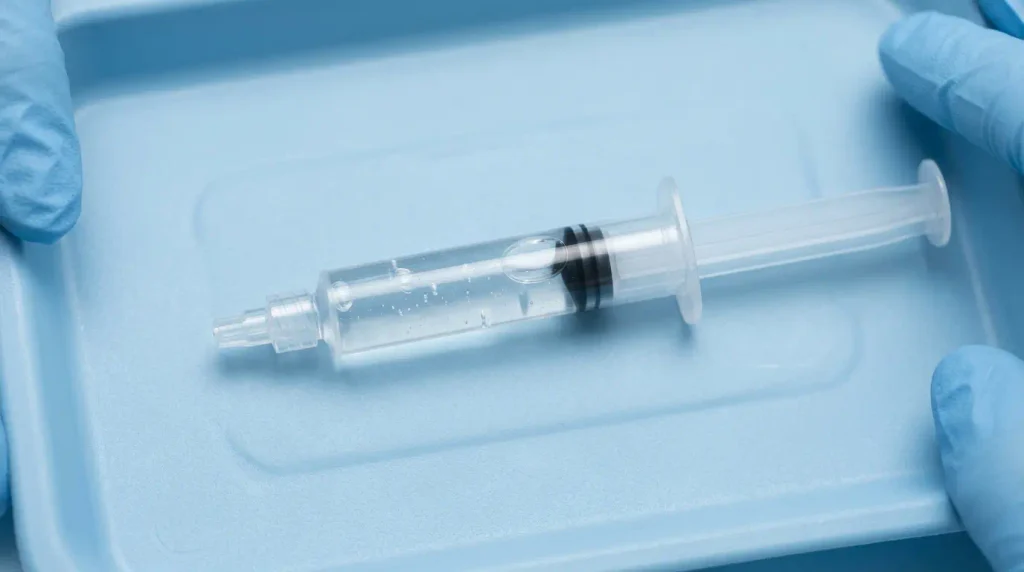
Arthrosamid is a gel injected into the knee joint. It treats osteoarthritis pain rather than ligament damage. A short look at the gel explains why.
A non-biodegradable hydrogel
Arthrosamid contains 2.5% cross-linked polyacrylamide and 97.5% water. This polyacrylamide hydrogel does not break down inside the joint. That separates it from hyaluronic acid injections, which the body gradually absorbs.
The product works as a hydrogel knee injection delivered in a single visit. Patients value that simplicity after months of repeated appointments during surgery and rehabilitation.
Action on the joint lining
Arthrosamid works on the synovium, the lining of the joint capsule. It does not simply coat the cartilage. The gel integrates into the lining, cushions the joint and reduces inflammation. Early analysis suggests an anti-inflammatory effect, and the exact mechanism of action remains under study. That honesty matters, because no injection should arrive with exaggerated promises.
Where the injection fits in the treatment ladder
Knee care usually climbs a ladder. Exercise, weight control, bracing and simple pain relief form the lower rungs. Injections sit in the middle. Surgery sits at the top.
Arthrosamine after ACL reconstruction belongs in that middle position. It suits patients whose symptoms persist despite good rehabilitation but who are not ready for another operation. Skipping the lower rungs rarely produces the best result.
Why the joint lining matters after injury
The synovium produces the fluid that nourishes and lubricates the knee. After a major injury, that lining can stay irritated for years. Persistent irritation fuels swelling, stiffness and pain even when the graft is sound.
Treating the lining therefore makes sense in a reconstructed knee. The gel gives that tissue a cushioning presence and aims to quieten the cycle of irritation.
What the gel cannot do
The injection does not rebuild cartilage. It does not tighten a loose graft either. Pain relief is the target, and structural repair is outside its scope.
Who may suit Arthrosamid after ACL reconstruction?
Arthrosamid after ACL reconstruction suits a specific type of knee. Suitability depends on the problem driving the pain. A stable knee with confirmed arthritis differs sharply from an unstable knee.
Features that point towards osteoarthritis
Knee pain after ACL surgery has several possible causes. Pain from osteoarthritis tends to follow a recognisable pattern.
Pain pattern
Aching builds after walking, stairs or long periods of sitting. Morning knee stiffness eases after a few minutes of movement. Swelling returns after busy days and settles with rest.
Imaging findings
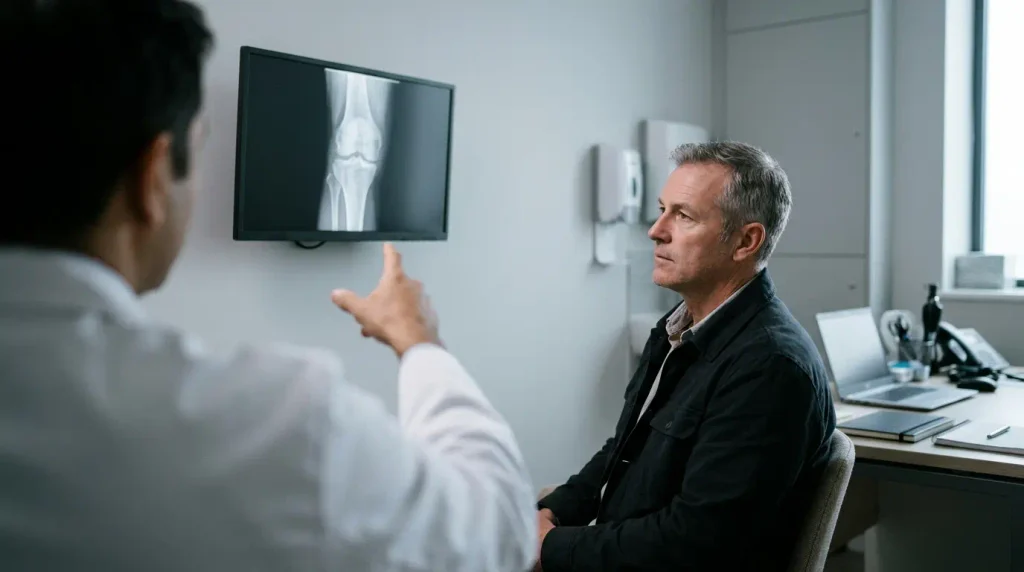
A recent X-ray or MRI should confirm osteoarthritis before treatment. Scans show joint space narrowing and bony spurs. They also help exclude other causes of pain.
Features that point away from injection
Repeated giving way suggests a stretched or failed graft. That problem needs surgical review rather than a gel. Instability calls for the kind of early diagnosis of an ACL injury that separates a graft problem from arthritis.
Locking or catching points towards a fresh tear or a loose fragment. Injection cannot fix a mechanical fault.
What specialists ask during assessment
The consultation covers the date of surgery, the graft used and any meniscus procedure. Rehabilitation progress and current activity levels also matter. Previous injections and their effect help guide the decision.
These details shape the plan more than age alone. A fit patient in the late thirties may suit treatment as much as an older patient. Scan findings matter more than the birth year.
Timing after surgery
Early recovery belongs to the surgeon and the physiotherapy team. The graft needs time to mature and muscle strength needs to return. Timing for Arthrosamid after ACL reconstruction depends on healing, rehabilitation progress and symptoms.
No fixed calendar date fits every patient, so specialist assessment decides the timing.
When Arthrosamid is not the right choice
Some knees need a different route. Safety screening comes before any injection. The main reasons for caution appear below.
Medical conditions that rule out injection
Inflammatory arthritis, active infection, a previous knee replacement, and bleeding disorders can make Arthrosamid inappropriate. Advanced bone-on-bone arthritis and gout also reduce suitability. Each case still receives an individual assessment.
Structural problems that need other treatment
A fresh meniscus tear can cause locking and sharp catching. A failed graft causes instability. Both problems call for a surgical opinion first.
Surgery and injection do not compete in these cases. Each treats a different fault in the knee.
Other causes of pain after reconstruction
Not every sore reconstructed knee has osteoarthritis. Scar tissue can limit bending and straightening. The tendon used for the graft can stay irritated. The kneecap joint can also ache, particularly on stairs.
Each cause needs its own treatment. Physiotherapy, targeted exercise or review of the operation may help more than an injection. A correct diagnosis protects patients from the wrong treatment.
Limits of the evidence
Major trials focused on knee osteoarthritis in general. One UK study protocol excluded knees with significant bone changes after earlier trauma. Published data specific to reconstructed knees appear limited.
Honest counselling therefore sets realistic expectations from the start.
How Arthrosamid compares with other knee injections
Several injections exist for knee osteoarthritis. Each works differently and lasts for a different length of time. A comparison helps match the option to the knee.
Corticosteroid injections
Corticosteroid injections target inflammation. Relief usually arrives quickly but often fades sooner. Specialists also space steroid doses carefully, because repeated use has limits.
Hyaluronic acid
A hyaluronic acid injection acts as a lubricant inside the joint. Published head-to-head data suggest Arthrosamid performs at least as well at 52 weeks. The duration of benefit extends considerably further with Arthrosamid.
Platelet-rich plasma
PRP uses concentrated platelets from the patient’s own blood. Results vary between individuals. Reviewing PRP versus Arthrosamid, Arthrosamid delivers a more predictable single-visit outcome.
Combining injections with rehabilitation
No injection replaces exercise. A calmer joint makes strengthening easier and more consistent. That consistency builds the muscle support that protects the knee in the long run.
Patients who pair treatment with a steady programme usually feel the difference sooner. The injection opens the door, and rehabilitation walks through it.
Choosing between options
The right choice depends on symptoms, scan findings and previous responses. A knee that improved briefly with steroids may suit a longer-acting option. A knee with advanced damage may need a surgical discussion instead.
What happens during assessment and injection
The process is short and structured. A consultation comes first, then imaging review and then the procedure. Arthrosamid after ACL reconstruction follows the same steps as any other knee. Most patients go home after a short observation period.
Preparing for the appointment
Useful items include the operation note, recent scans and a list of current medicines. A summary of rehabilitation history also helps. These documents save time and sharpen the assessment.
Good questions also help. Patients often ask about expected relief, activity limits and what happens if symptoms return. A written list prevents anything slipping out of mind in the consulting room.
Consultation and imaging
The specialist reviews surgical history, graft type, meniscus status and current symptoms. Scans confirm the diagnosis. Medication, allergies and infection history also receive checks.
The injection itself
An Arthrosamid injection happens under local anaesthetic, so no general anaesthetic is needed. An ultrasound-guided injection places the gel accurately inside the joint. A plaster covers the site afterwards.
Patients can walk immediately and usually rest for about 30 minutes before leaving. The visit feels far gentler than the original operation.
Recovery and side effects
Reported side effects are mostly mild to moderate pain and swelling at the injection site. Arthrosamid recovery time for light daily activity typically spans one to two weeks. Heavy loading is often kept reduced for a short period.
Long-term Arthrosamid safety data look reassuring when patients are selected carefully. Patients often look for reliable information on non-surgical joint pain before choosing an injection or surgery.
Rehabilitation and lifestyle after the injection
Gel alone does not rebuild muscle strength. Rehabilitation still matters once the injection is done. A few habits protect the results.
Strength and movement
Strong quadriceps and hamstrings share the load that the ligament and joint once carried alone. Physiotherapy-guided strengthening continues after the injection. Low-impact activity such as swimming or cycling keeps the joint moving.
Pivoting sports need a frank talk with the specialist. The graft, the meniscus and the joint lining all influence what is sensible.
Gentle warm-ups before activity also help. Five minutes of easy cycling or walking prepares the joint and the muscles around it. Cooling down afterwards keeps stiffness from building overnight.
Weight and bracing
Every extra kilogram adds load to the knee with each step. Gradual weight control therefore protects the joint. A well-chosen knee brace for osteoarthritis can add confidence on busy days.

Everyday activity goals
Realistic goals keep motivation high. Comfortable walking, stairs without a grimace and a full night’s sleep make a good starting list. Gardening, cycling and playing with children follow naturally.
Progress usually comes in small steps rather than one big leap. A simple activity diary helps the specialist judge how the knee responds over several weeks.
Pacing the knee
The knee has already survived one major drama. A calm, steady routine keeps the sequel dull, which is exactly the goal. Consistent small habits outperform occasional heroic efforts.
What long-term results can look like
Results vary between knees. Clinical reports describe relief lasting for years. Expectations still need to stay realistic.

Manufacturer material reports a significant reduction in knee osteoarthritis pain even five years after treatment. Some treatment centres report sustained improvement for up to three to five years. In suitable patients, that relief can help delay knee replacement.
Arthrosamid treats symptoms rather than reversing arthritis. Regular follow-up keeps expectations and the wider plan on track. The wider plan can still draw on other non-surgical knee pain treatments as needed.
Arthrosamid after ACL reconstruction therefore works best as one part of a long-term plan. That plan combines strength work, weight control, sensible activity and timely review. The injection supports those habits and does not replace them.
Warning signs that need prompt review
Most post-injection symptoms settle quickly. A few signs deserve fast attention. Early review prevents small problems from growing.
A hot, red and very swollen knee with fever needs urgent medical help. Severe pain that worsens over several days also needs review. Sudden giving way, locking or a new inability to straighten the knee points to a mechanical problem. Urgent symptoms always take priority over waiting for the next appointment.
Symptoms that return slowly over months call for a routine follow-up instead. The specialist can then reassess the joint and update the plan.
Keeping short notes helps that review. A record of pain levels, swelling and activity limits shows the trend clearly. Trends tell a clearer story than memory does.
Frequently asked questions
Can Arthrosamid be given after ACL surgery?
Arthrosamid can be considered once the reconstruction has healed and osteoarthritis is the main source of pain. The specialist checks imaging, graft stability and general health first. Injection does not treat a loose graft or a fresh meniscus tear. Assessment therefore comes before any decision.
How long after ACL reconstruction can Arthrosamid be injected?
No single interval applies to every patient. The decision depends on graft healing, rehabilitation progress and the pattern of symptoms. The surgeon and the injecting specialist usually share that judgment. A reconstructed knee that still needs early rehabilitation is not ready for this step.
Does Arthrosamid repair a damaged ACL graft?
Arthrosamid does not repair the graft or the ligament. It acts on the joint lining to cushion the joint and ease arthritis pain. A stretched or failed graft needs a surgical opinion instead. Stability and arthritis are two separate problems with two separate solutions.
Will Arthrosamid stop osteoarthritis from getting worse?
Arthrosamid treats symptoms rather than reversing arthritis. Some patients enjoy relief lasting several years. Progression of the underlying joint wear still varies from knee to knee. Regular follow-up and sensible activity habits remain important.
What is the Arthrosamid recovery time after the injection?
Most patients walk immediately and return to light daily activity within one to two weeks. Mild to moderate pain or swelling at the injection site is the most commonly reported effect. Heavy loading usually stays reduced for a short period. The specialist gives personal advice on pacing.
Can Arthrosamid delay knee replacement after an ACL injury?
Relief from knee osteoarthritis symptoms can help some patients delay knee replacement. The effect depends on the severity of arthritis and the activity level. Advanced damage reduces the chance of lasting benefit. A specialist discusses realistic outcomes after reviewing scans and symptoms.
Who should avoid Arthrosamid?
Active infection, inflammatory arthritis, bleeding disorders and a previous knee replacement can make treatment inappropriate. Advanced bone-on-bone arthritis also reduces suitability. A mechanical problem such as a failed graft needs surgical review first. Individual assessment decides every case.
Osteoarthritis can follow ACL surgery even when the graft performs well. Arthrosamid after ACL reconstruction targets arthritis pain rather than the ligament. It suits stable knees with imaging-confirmed osteoarthritis. Careful screening and realistic expectations determine the outcome.
Mr Syed Nadeem Abbas is a specialist in non-surgical knee and joint pain.
Read more: Arthrosamid and Baker’s cyst can be assessed together before treatment starts
Read more: An Arthrosamid Clinic London Patients Can Trust Passes Five Safety Checks